

14 July, 2019
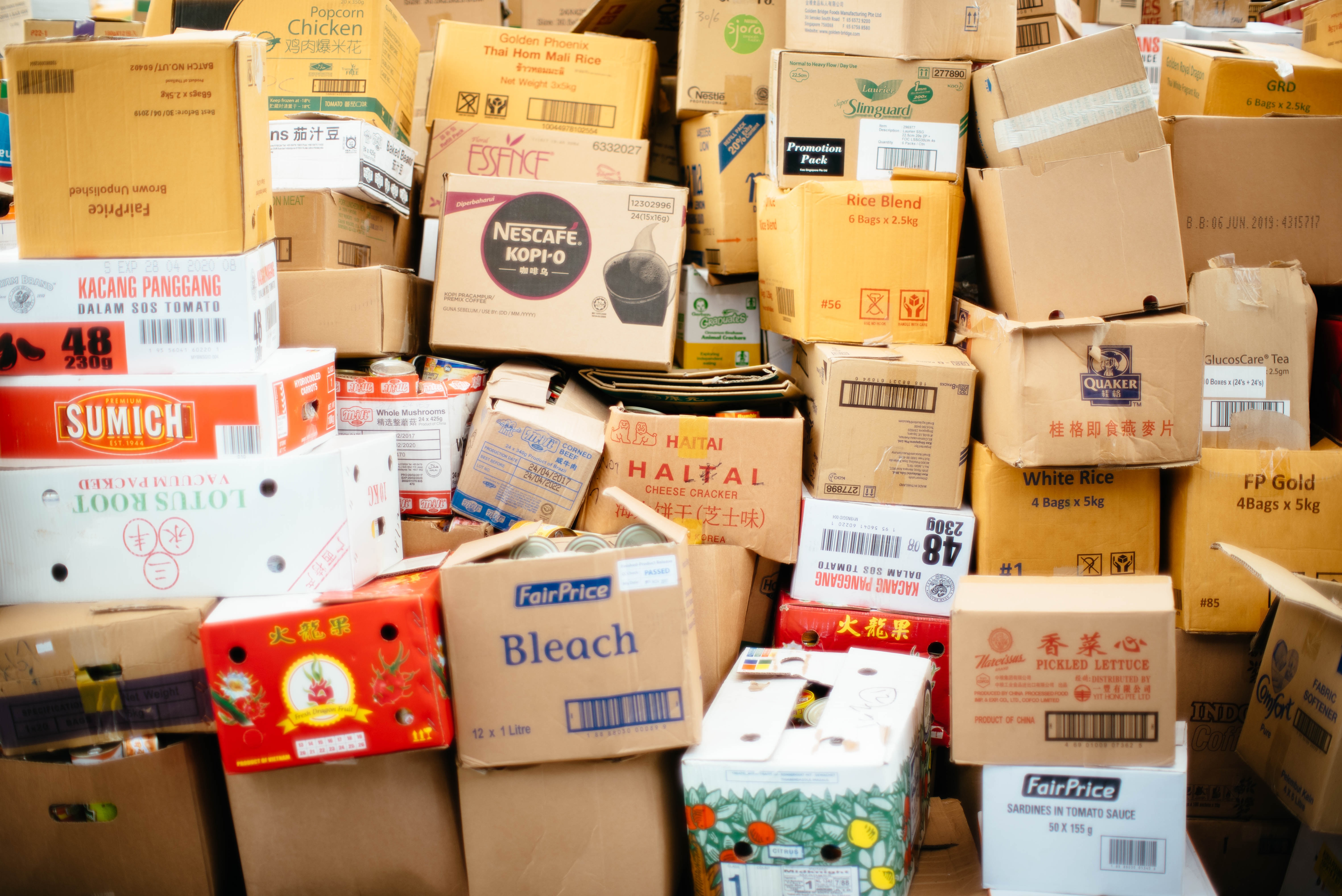
(Photo: chuttersnap)
Ever since its inception, cardboard or paperboards have been used for a wide range of purposes. From packaging containers, artwork, building materials, fashion, and even agriculture. Due to its lightweight mass, durability, efficient handling, and is cheap to manufacture, it is a preferred material in the freight and manufacturing industries.
The earliest known usage of cardboards was in the second century B.C., in the Han Dynasty of ancient China. Mulberry tree bark, dried hemp and other plant fibres were mixed with water, and spread onto a frame. When it had formed a thin tissue, it was then pressed to make paper. The paperboards, as it was referred to, was then used to wrap and preserve foods. [1]
Furthermore, the first documented usage of cardboard packaging was in Germany, in the year 1817. It was used to package the popular board game known as “The Game of Besieging”.
The first commercial company to begin manufacturing and selling cardboard boxes is the English company, M. Treverton & Son, also in 1817.[2]
Cardboard boxes further evolved in France, in 1840. The cardboard box manufacturing and sales thrived in Valreas, France. It was used to transport silk moths. [3]
The foldable cardboard box was invented in 1890 by Robert Gair; he was a paper printer from Brooklyn, Manhattan in the United States of America.
Some amazing trivia about cardboard boxes are firstly, that there was an area in London, known as the Cardboard box City during the period of 1983 to 1998. Near the Waterloo Train station, it was occupied by hundreds of homeless people. They all lived in cardboard boxes, until they were evicted and re-located by London authorities.
Secondly, another interesting fact about cardboard boxes, the United Kingdom is the highest producer of cardboard boxes. According to cardboardhelp.com, ‘The UK produces 5 billion of cardboard boxes every year. This is equal to a stunning 83 boxes per individual…’ [4]
The cardboard industry in the United Kingdom is believed to be worth £4 billion, and employs close to 30,000 people.
Also, fashion designer Jeremy Scott created a whole collection of cardboard-inspired outfits. This was launched during the 2017 Moschino Fall fashion show in Milan, Italy.
Since the 1980s, cardboard box packaging has almost driven wooden crates to extinction, and the cardboard industry globally is still growing – especially with the ease of online purchasing.
With the inevitable rise in consumerism and urban re-settling, cardboard materials and boxes will continue to stamp its relevance and necessity amongst civilization.
References:
1) Hook, P., & Heimlich, J. E. (2002). Paper and Paper Products: A History of Packaging. Columbus: Ohio State University.
2) Little Known Facts about Cardboard You Didn’t Knew. (2019, July 14). Retrieved from cardboardhelp: http://cardboardhelp.com/little-known-facts-about-cardboard/
3) Sacharow, S., & Griffin, R. C. (1970). Food Packaging: A Guide for the Supplier, Processor, and Distributor. Westport, Connecticut: AVI Publishing Company.
4) Vancluse le Departement. (n.d.). Le musée du Cartonnage et de l’Imprimerie à Valréas. Avignon: Vancluse le Departement.


